Zion williamson weight loss has been one of the most talked-about storylines in modern basketball — from the moment he arrived in the NBA to the rumors, the contract clause, the offseason training, and the public reactions from legends like Shaquille O’Neal. This article explains the timeline, the medical context, the reported numbers, and what a genuine Zion williamson weight loss program looked like as he prepared to return to play. A long-tail phrase you may see in searches is “zion williamson weight loss progress summer 2022,” and that story anchors much of the reporting around his comeback.
1. Draft hype and the unusual physique
Zion Williamson entered the NBA as the No. 1 overall pick in 2019 and immediately became a cultural phenomenon for his explosive play. Reports at the time listed his weight around 285 pounds, a number many outlets repeated because it was the most recent public measurement during his college-to-pro transition. Even at that weight, his combination of speed and power looked unlike most players at 6’6″.
Because of that unique body type, zion williamson weight loss became a constant topic of discussion. Teams, media outlets, and fans debated whether shedding mass would improve durability or whether his natural strength and size were core to his dominance. The conversation around his weight never separated from conversations about long-term health and career longevity.
2. Injuries, surgical interventions, and the missed season
Early in his professional career Zion experienced a series of injuries that limited his playing time. He underwent arthroscopic knee procedures during his rookie year and later had foot surgery in the 2021 offseason that caused him to miss the entire 2021–22 season. These medical events made zion williamson weight loss not only a matter of aesthetics but a topic tied directly to injury prevention and return-to-play planning.
Medical teams typically weigh the interplay of load, biomechanics, and body composition — the same factors that made the question of zion williamson weight loss significant. Reducing unnecessary mass can lower repetitive stress on joints, but it must be done carefully to maintain strength, power, and explosiveness.
Quick timeline (reported)
- 2019: Drafted No. 1 overall; reported weight ~285 lb.
- 2019–20 season: Knee issues and limited availability.
- 2021 off‑season: Foot surgery reported; missed 2021–22 season.
- 2022 and after: Public reports of significant conditioning work and retooled nutrition plans aimed at body composition changes.
3. The contract, the unusual weight clause, and organizational risk management
In the extension negotiations following the early seasons, the New Orleans Pelicans and Zion reached a maximum rookie-scale extension reportedly valued at $193 million guaranteed over five years, with incentives that could push the deal to roughly $231 million. Given the financial commitment and the player’s injury history, the team included a weight clause in the contract that tied guaranteed money to specific body-composition targets.
The clause that was widely reported required that the sum of his weight and body-fat percentage remain below a specified threshold (commonly noted in reporting as 295 when combined with percent body fat). The exact mechanics were handled privately between the team and player, but the public takeaway was clear: the organization wanted measurable accountability tied to zion williamson weight loss and maintenance.
4. How Zion approached weight, conditioning, and nutrition
Reports described a multi-faceted approach to zion williamson weight loss that combined:
- Strength and conditioning work focused on power-to-weight optimization.
- Two-a-day training sessions in some camps to increase conditioning and reduce body fat while preserving strength.
- Detailed nutrition plans and meal prep, reportedly involving professional chefs and family support to create sustainable changes in diet quality and portioning.
- Close monitoring by performance staff and trainers to avoid cutting mass too quickly, which would risk power loss or injury recurrence.
Multiple outlets noted that trainer Jasper Bibbs worked extensively with Zion during focused training stints, and that Chef Christian Green was part of a nutrition plan to normalize meal preparation and consistent caloric/protein targets. These pieces form the backbone of a serious approach to zion williamson weight loss that aimed at improving durability without sacrificing the unique athletic traits that make him a matchup nightmare.
5. What the pros said — public reactions and support
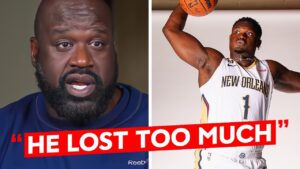
Public commentary from former stars and current players has followed Zion’s physical transformation. Critics once lampooned his body, but many voices — including Shaquille O’Neal — have publicly praised the progress he’s shown in photos and in-season conditioning. Shaq shifted from roast-style jokes to supportive commentary, highlighting how powerful big athletes can be when they control their body composition and use size as a weapon.
That shift in tone is important. When conversations move from ridicule to constructive analysis, it creates a healthier environment for a player tackling real medical and performance challenges tied to zion williamson weight loss.
6. What successful weight-loss and body-composition work looks like for a player like Zion
For high-level athletes, “weight loss” is rarely about a single number on a scale. The objective is improved body composition: more lean mass relative to fat mass, better movement patterns, and lower repetitive joint stress without losing the neuromuscular qualities that generate elite power and speed.
A sound program for a player like Zion typically includes:
- Strength retention and power development — keep one-rep max strength while improving rate of force development.
- Targeted conditioning — sport-specific work that transitions energy systems without sacrificing recovery.
- Nutrition periodization — phased caloric and macronutrient adjustments aligned to training load and recovery requirements.
- Ongoing monitoring — body-composition testing (DEXA or skinfolds), functional movement screens, and load management metrics.
All of this informs a sustainable approach to zion williamson weight loss that prioritizes performance, health, and career longevity.
7. Performance implications: what fans should understand
Shedding excess body fat can reduce mechanical load on knees and feet and help with endurance. However, abrupt weight loss or misguided dieting can reduce power and increase fragility. The ideal path maintains or improves strength and explosiveness while lowering nonfunctional mass.
Because Zion’s game combines power, verticality, and sudden change-of-direction, conditioning work focused on eccentric control, landing mechanics, and reactive strength is crucial. That is why trainers emphasized strength-preservation while pursuing zion williamson weight loss.
8. Evidence-based takeaways for coaches and athletes
Whether you coach youth players or train professionals, the lessons from Zion’s journey are instructive:
- Prioritize function over scale weight. Body composition and movement quality predict durability more than an arbitrary number on a scale.
- Use multidisciplinary support. Strength coaches, nutritionists, chefs, and medical staff must coordinate for an elite athlete’s plan.
- Periodize for the season. Offseason offers the best window to change body composition; in-season, focus shifts to maintenance.
- Measure and adapt. Regular testing (body-fat, strength, mobility) prevents overcorrection and preserves performance.
9. Internal resources and related reading
Below are internal pages and placeholders for deeper reading and practical plans. First link required by site policy:
- IAVI Fitness — https://iavifitness.com/
- Nutrition fundamentals — https://iavifitness.com/nutrition
- Strength training programs — https://iavifitness.com/exercise/
- Meal prep—https://iavifitness.com/nutrition/
10. Authoritative sources and further reading
For context and factual reporting, consult mainstream sports reporting archives and medical resources. A few authoritative links that provide background on injuries, player bios, and transplant science include:
- Wikipedia: Zion Williamson — https://en.wikipedia.org/wiki/Zion_Williamson
- NBA player profile and news — https://www.nba.com/
- ESPN player coverage — https://www.espn.com/
- Hand transplantation background — https://en.wikipedia.org/wiki/Hand_transplantation
- List of heaviest basketball players (historical context) — https://en.wikipedia.org/wiki/List_of_heaviest_basketball_players
11. FAQ — direct answers to common questions
The questions below are answered with practical, source-aware explanations. They reflect reporting, medical consensus, and what is publicly known.
How much weight has Zion Williams lost?
Reporting around Zion’s conditioning cycles has described a visible reduction in body fat and improved muscle definition following focused offseason training. Exact, current numbers for his weight vary and the team has not released a single official public figure as a definitive “after” measurement. Media outlets quoted earlier numbers (285 at draft, reports of 330 in 2021) and later noted that his frame tightened during dedicated training camps. Reliable reporting indicates notable progress, but precise, up-to-the-minute figures should be taken from team or player disclosures.
How did Zion lose his hands?
Zion Williamson has not lost his hands. This question appears to be based on a misunderstanding or a mis-typed query. Zion has dealt with orthopedic injuries to his knees, foot, and fingers at times, but there is no record of a loss of hands.
How much did Zion Williamson used to weigh?
Public reports place Zion at roughly 285 pounds at the time of the 2019 NBA Draft. Subsequent reporting in the 2020–21 period noted a rise in his listed weight, with some outlets citing figures near 330 pounds. These numbers came from media reports, team observations, and public listings; exact figures can vary depending on the source and the timing of measurements.
Did Zion Williamson have surgery?
Yes. Zion underwent arthroscopic knee procedures early in his career and had foot surgery in the 2021 offseason that kept him out of the 2021–22 season. These surgeries were reported by team statements and major sports outlets. Surgical decisions were made with the goal of preserving long-term function and addressing structural issues.
How does 30% bodyfat look?
For men, 30% body fat typically presents as a visibly higher amount of soft tissue around the abdomen, hips, chest, and limbs. At that level, relative strength and power can still be high if absolute muscle mass is large (as with some athletes), but risk factors for metabolic issues and joint loading increase. Clinically, body-fat percentages are best assessed via validated testing (DEXA or multiple-site skinfold assessments) rather than visual estimation alone.
Who has the lowest BMI in the NBA?
NBA rosters fluctuate, and BMI (body mass index) is a crude measure that does not reflect athleticism. Historically, some smaller guards have displayed the lowest BMIs, sometimes in the high teens to low 20s. Current lowest BMI as a single definitive figure changes each season with roster movement and is not a stable statistic without a specific date and roster snapshot.
What is the most painful injury in basketball?
Pain is subjective, but athletes and clinicians often cite Achilles tendon ruptures and severe compound fractures as among the most acutely and chronically painful injuries. ACL tears and major ankle fractures also cause significant pain and lengthy rehabilitation. Pain intensity depends on the injury type, mechanism, and individual tolerance.
Is hand transplant possible?
Yes. Hand transplantation is a complex microsurgical procedure that has been performed successfully in select centers. Candidates undergo extensive screening, and the procedure requires lifelong immunosuppression and rehabilitation. For more detail see the hand transplantation article on Wikipedia: https://en.wikipedia.org/wiki/Hand_transplantation
Do knee injuries ever fully heal?
Many knee injuries can be treated successfully and allow athletes to return to high levels of play. The outcome depends on the specific structure injured (meniscus, ACL, articular cartilage), the severity, surgical technique when required, and the quality of rehabilitation. Some injuries leave residual symptoms or increased risk for future degeneration, so “full heal” can mean a range of functional outcomes.
Who is the heaviest player in the NBA?
Heaviest players vary by season. Historically, players such as Boban Marjanović, Tacko Fall, and others have been among the heaviest in the league. A current-season roster check is needed for a definitive number, as player weights and roster compositions change annually.
What does LeBron think of Zion?
LeBron James has publicly recognized Zion Williamson’s athletic gifts and potential impact on the league. He has been complimentary in interviews and social contexts, noting Zion’s rare blend of size and athleticism. For direct quotes, check recent interviews and media coverage from reputable sports outlets.
Is 5’9 short for an NBA player?
Yes, 5’9″ is below the NBA average height (which hovers around 6’6″). However, shorter players can and have succeeded at elite levels — examples include players like Isaiah Thomas (listed at 5’9″) and Spud Webb (5’7″). Skill, speed, and basketball IQ matter significantly.
How much does Zion Williamson weigh currently?
Publicly accessible, official current weight numbers for Zion change with reporting cycles. Team disclosures or pregame paperwork provide the most accurate snapshot; media reports and recent photos suggest he trimmed his frame compared to the highest reported weights. For the most accurate figure, consult the latest team roster or official communications.
How much weight has Serena Williams lost on Ozempic?
There is no verified public medical record confirming Serena Williams used Ozempic or the exact weight change attributable to any single drug. Discussions about celebrity weight and medications should be treated cautiously unless verified by the individual or their representatives.
Is 12% bodyfat lean?
Yes. For men, 12% body fat is considered lean and athletic. It typically shows muscle definition while preserving healthy energy stores. For women, 12% is very low and usually below recommended levels for general health unless an elite athlete is under close medical supervision.
Who was the heaviest NBA player currently?
As with earlier answers, the heaviest player changes with each season. Use up‑to‑date roster listings and official team weight reports for a current answer. Historical lists are available on reference pages such as Wikipedia.
Author: IAVI Fitness editorial team. IAVI Fitness is focused on evidence-based fitness and athlete performance strategies and provides guides for nutrition, strength, and rehabilitation tailored to competitive athletes.
Published by IAVI Fitness. For evidence-based training plans and nutrition templates, visit https://iavifitness.com/.
The story of zion williamson weight loss is more than a headline. It’s a case study in integrating medical care, performance training, and nutrition into a cohesive return-to-play plan. For athletes and coaches, the lessons are clear: plan deliberately, measure often, and prioritize function over simplistic weight targets.
If you want science-backed programs that prioritize strength and safe body-composition changes, explore IAVI Fitness resources and the practical plans linked above. For team consultations or athlete programming, reach out to your sports medicine and performance staff and use validated testing to guide progress.
Additional outbound resources
- Wikipedia — Zion Williamson: https://en.wikipedia.org/wiki/Zion_Williamson
- NBA official site: https://www.nba.com/
- ESPN player coverage: https://www.espn.com/
Curious how to apply these lessons to your own training? Start with a body-composition test and a short-term periodized nutrition plan. For customizable templates and step-by-step programs, visit IAVI Fitness — https://iavifitness.com/ — and review our guides on nutrition and strength programming to build a sustainable transformation plan.